



Most closets are built with one rod and one shelf set at the same height, whether the person using them is five feet tall or six feet two. A few inches can decide whether you grab a shirt without thinking or keep it on a chair. This guide gives you a set of heights to plan around, and explains the accessibility standard behind the numbers.
Where the reach numbers come from
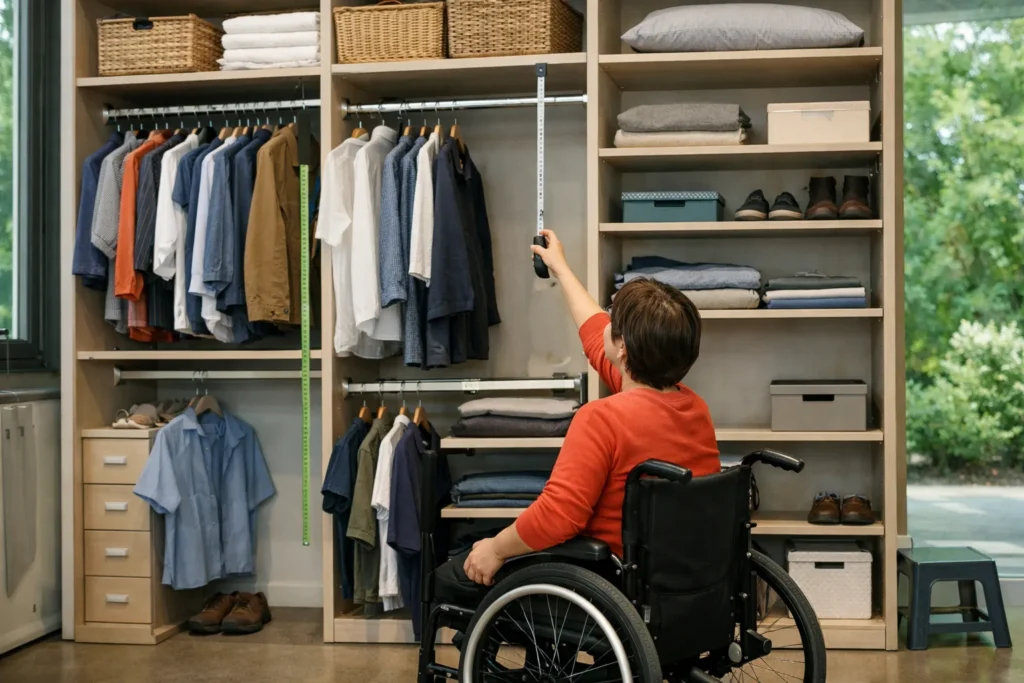
The Americans with Disabilities Act design standards set reach ranges for people who use wheelchairs. For an unobstructed forward reach, the standard range runs from 15 inches (380 mm) to 48 inches (1,220 mm) above the floor. Those numbers describe a comfortable zone for many people, including children and anyone who prefers not to climb on a stool. They are used for public buildings, but they make a useful guide at home too. You can read general background on the concept on Wikipedia, and the full technical standard is published by the federal government.
Think of 15 to 48 inches as your “easy zone.” Put the things you use most there, and use the higher and lower zones for items you reach for less.
Height guide for an adult closet
These heights are starting points. Adjust them to the people who use the closet, and measure yourself standing with your arm slightly raised.
| Zone | Height range | What to store | Who can reach it |
|---|---|---|---|
| Floor and low shelf | 0 to 15 inches | Shoes, bins of off-season items, laundry baskets | Most adults by bending; children easily |
| Easy zone | 15 to 48 inches | Folded sweaters, daily shoes, drawers, hanging short items | Most adults and older children, including seated users |
| Main hanging rod | About 60 to 66 inches for long clothes; 40 to 48 inches for a lower rod | Shirts, dresses, pants, coats | Most adults standing |
| Upper shelf | About 66 to 80 inches | Spare bedding, hats, boxes you open a few times a year | Adults standing, sometimes with a stool |
| High storage | Above 80 inches | Luggage, keepsakes, holiday items | Adults with a stool or a ladder |
Double-hang setups
If you hang only shirts, skirts, and folded pants, two rods can double your capacity. A common arrangement puts the upper rod at about 80 inches and the lower rod at about 40 inches. A rod above 66 inches is hard to use without a pull-down tool or a stool, so keep that one for items you wear less. A single long rod at about 66 inches works for dresses and coats, which need 60 inches or more of hanging space.
Kids’ closets and drawers
Children can dress themselves if the closet fits them. Lower a rod to about 36 to 42 inches for young children, and raise it as they grow. Use open bins or low drawers at 12 to 24 inches for socks, underwear, and play clothes. Put out-of-season clothes and special items higher, where an adult can reach them. Hooks at a child’s shoulder height work better than hangers for jackets and backpacks.
Shelf depth and spacing
- Depth: 12 inches works for folded clothes, and 16 inches for bins and bags. Anything deeper tends to turn into a place where things get lost.
- Spacing: 10 to 12 inches between shelves for stacks of sweaters, and 14 to 16 inches for bins.
- Rod clearance: allow about 12 inches from the rod to the shelf above for hanger hooks, and about 1.5 inches from the rod to the wall or side so clothes can slide.
- Weight: support shelving and rods properly, using wall studs or the right anchors, because a full rod of winter coats is heavy.
How to apply it
- Measure the closet height and width, and the height of each person who uses it.
- Decide which items you use daily, weekly, and rarely.
- Match the daily items to the 15 to 48 inch zone and the rare items to the highest and lowest areas.
- Adjust the rod and shelf positions, and test them for a week.
Moving a rod takes a few minutes and a level, and the payoff lasts. If you are also clearing out the closet, our home organization guides will help you decide what goes back in.
This guide is general. If anyone in your household has a disability, an occupational therapist or accessibility specialist can recommend heights that fit that person’s needs.