



A three-bedroom house holds more than most people realize. Between the closets, the kitchen cabinets, the basement shelves, and the drawer everyone calls “the junk drawer,” a typical family home can hide thousands of objects. The method below was refined in an ordinary house in Columbus, Ohio, and it works because it never asks you to tackle everything at once. You pick one room, set a timer, and stop when it rings.
Start with the right order of rooms
Most people begin with the room that bothers them most, which is usually the one with the most emotional baggage. That is a mistake. Start with a space where the decisions are easy and the win is visible, then work your way toward the hard ones.
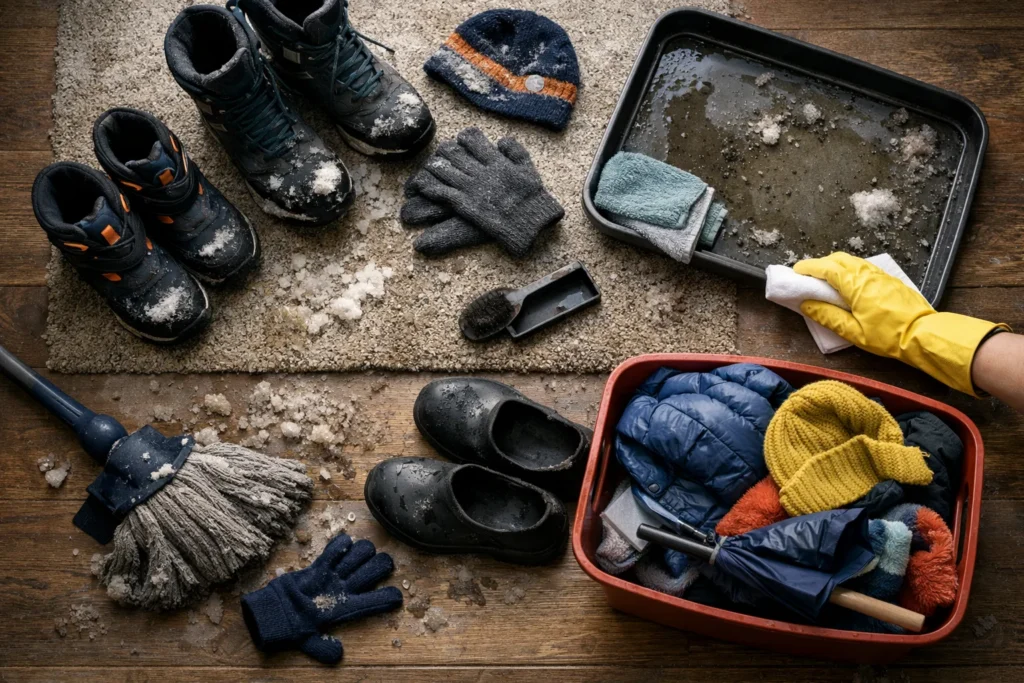
- Entryway and hall closet. Coats, shoes, and umbrellas are easy to judge. You either wear them or you do not.
- Kitchen. Expired food, duplicate gadgets, and mismatched lids go quickly.
- Bathrooms. Old toiletries and half-empty bottles are low-stakes decisions.
- Living room. Magazines, cords, remote controls, and surfaces that have become storage.
- Bedrooms. Clothes take longer because every item has a story, so give them a full session each.
- Children’s rooms. Do these with the kids, not behind their backs.
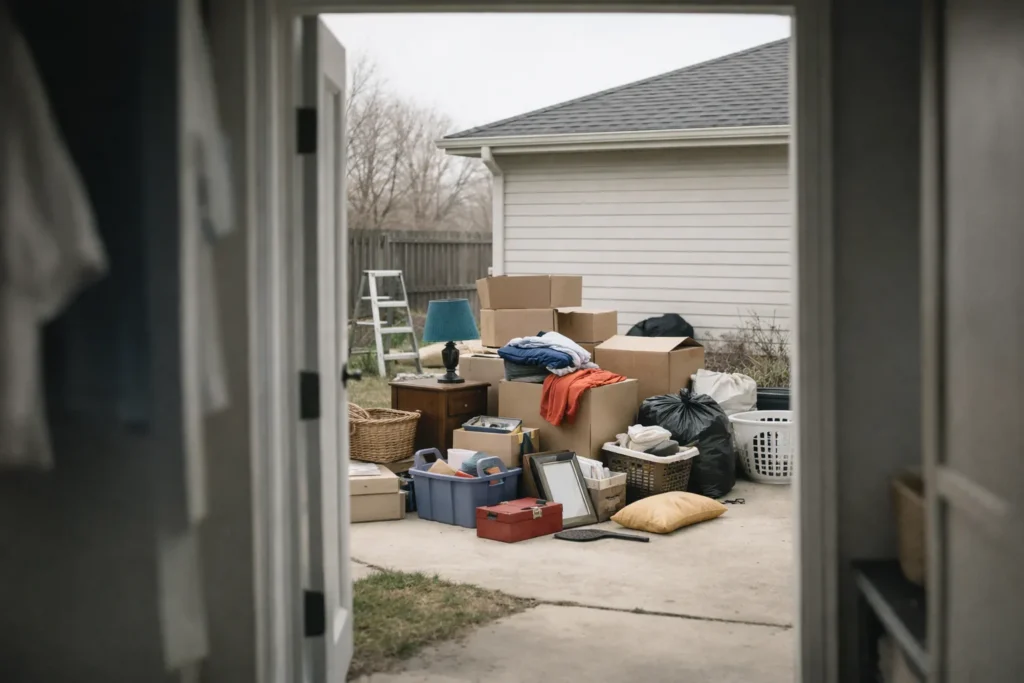
- Basement, attic, and garage. These come last because they hold the items you have been avoiding for years.
Expect to spend six to ten sessions on a house this size. That is not a failure of speed. A slow, finished project beats a fast, abandoned one.
The 45-minute session
Forty-five minutes is long enough to make real progress and short enough that you will not quit from exhaustion. Professional organizers often recommend working in timed blocks, and the National Association of Productivity and Organizing Professionals, known as NAPO, publishes general guidance on getting started with an organizing project. Here is how a session runs.
- Minutes 0 to 5: prepare. Gather three bags or boxes and a marker. Take a quick “before” photo of the room if you like seeing progress.
- Minutes 5 to 35: sort. Work in one zone at a time, such as one shelf, one drawer, or one corner. Pull everything out of that zone first, then decide what goes back.
- Minutes 35 to 45: finish. Carry the donate bag to the car, the trash bag to the bin, and put the keep items where they belong. Wipe the surface you just cleared.
When the timer rings, stop. Stopping on schedule teaches your brain that decluttering has an end, which makes it much easier to start the next session.
The three bags
Every item you touch goes into one of three places: keep, donate or sell, or trash and recycle. A fourth pile, “I cannot decide,” is where projects go to die, so avoid it. Instead, use a single small box labeled “maybe” for each room, with a date written on the outside. If you have not opened the box in three months, donate it unopened.
- Keep: goes back to a designated spot, not to the nearest flat surface.
- Donate or sell: clean items in good condition that someone else can use. Put the bag in your car trunk right away so it actually leaves the house.
- Trash or recycle: broken items, stained clothes, dried-out pens, and expired medicine. Check local rules for electronics, batteries, and chemicals, and see the U.S. Environmental Protection Agency for general household hazardous waste guidance.
The three questions
When you hold an item and cannot decide, ask these three questions in order. Stop at the first clear answer.
- Have I used it in the past year? If it is seasonal, such as a snow shovel in Ohio, allow one full cycle of seasons.
- Would I buy it again today, at today’s price? If the answer is no, the item is taking space on credit.
- Does it have a real home in this house? If you cannot name the shelf, drawer, or hook where it lives, it is clutter waiting to happen.
Sentimental items need a gentler rule. Keep one box per person for keepsakes, and when the box is full, you choose what stays. The limit does the hard work for you.
Room-by-room notes
Kitchen
Empty one cabinet at a time. Group items by task: baking, coffee, food storage, everyday dishes. Check expiration dates on spices, canned goods, and baking powder. Containers without matching lids go. A good test is to ask how many you really use in a week, and keep that number plus two.
Bedrooms
Take every piece of clothing out of a closet and lay it on the bed. Put back only what fits, is in good repair, and that you have worn in the past year. Hang what you keep with hangers facing the same direction, and turn a hanger backward after you wear an item. Six months later, the hangers still facing the original way show you what you can let go. If closets are your pain point, see our guides in storage and closets.
Living room and paper
Pick up every loose object and return it to where it lives, or decide it has no home. Cords with no known device, old remotes, and stacks of mail are the usual suspects. Open the mail over the recycling bin and keep a single tray for items that need action this week.
Basement and garage
These spaces collect paint cans, old tools, sports gear, and boxes from the last move. Work in categories, not shelves, so you can see how many of one kind of item you own. Set paint, batteries, and chemicals aside for a household hazardous waste drop-off instead of putting them in the trash.
Keep the house from refilling
Decluttering fails when the inflow is bigger than the outflow. A few small rules protect your work:
- One in, one out. When something new comes in, something similar leaves.
- A weekly donation run. Keep a bag in the closet and drop it off when it fills.
- A daily ten-minute reset. Return stray items to their homes before bed.
- Surfaces stay clear. Counters, dining tables, and stairs are for passing through, not storing.
A realistic timeline
Plan on two sessions per week for six weeks. In week one, do the entryway and kitchen. In week two, do the bathrooms and living room. Weeks three and four belong to bedrooms, and weeks five and six handle the kids’ rooms and the basement or garage. If a week gets away from you, skip it and pick up where you left off. The goal is a house that works for the people who live in it, not a showroom.
When the last room is done, walk through the house once with a notebook. Write down every spot where clutter returned within a week. Those are the places that need a better system, such as a hook, a basket, or a label, rather than more discipline.