

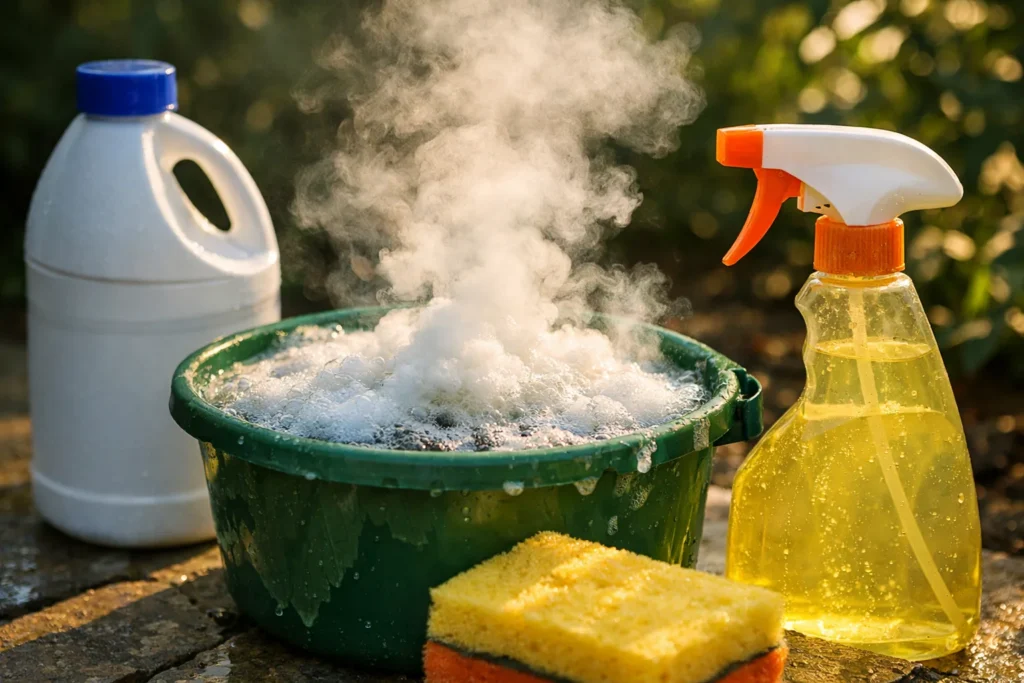
Most household cleaning accidents do not happen because someone ignored a warning. They happen because two products that each seem harmless were used one after the other in a small, closed bathroom. Bleach and ammonia are the classic example. Together, they produce a toxic gas that can injure the lungs within minutes.
What happens when you mix them
When bleach and ammonia combine, they release chloramine gases. The Centers for Disease Control and Prevention (CDC) warns that mixing cleaning products can create dangerous fumes. Breathing these gases can cause coughing, shortness of breath, and chest pain, and exposure to high levels can cause serious injury.
Ammonia is in some glass cleaners and multi-purpose sprays. Bleach, or sodium hypochlorite, is in many disinfectants, toilet bowl cleaners, and mildew removers. The danger is not always obvious, because the ingredient may be written in small print. Check the label and the safety data sheet for each product before you use it.
Other combinations to avoid
- Bleach and vinegar or other acids. This releases chlorine gas. Many drain and toilet cleaners are acidic.
- Bleach and rubbing alcohol. This can produce chloroform and other harmful compounds.
- Bleach and some drain cleaners. Mixing can cause a violent reaction.
- Hydrogen peroxide and vinegar in one container. This forms peracetic acid, which can irritate skin, eyes, and lungs.
The safe rule is simple: use one product at a time, rinse the surface well with water, and let the area dry before you use anything else. Never combine products in a single bottle, and never put a cleaner in an unlabeled container.
Warning signs
Leave the area at once if you notice any of the following:
- A sharp, chemical smell that stings the nose or throat.
- Burning or watering eyes.
- Coughing, wheezing, or trouble breathing.
- Chest tightness, nausea, or headache.
People with asthma, other lung conditions, or heart conditions can react more quickly. Children and pets are also more vulnerable, so keep them out of the room when you clean.
What to do if you mixed them
- Get out. Leave the room and go outside or to a space with fresh air. Take children and pets with you.
- Do not stay to clean up. Close the door behind you if it is safe, and open windows from outside if you can reach them easily.
- Call for help. Poison Control can give guidance at 1-800-222-1222, and the line is free and open at all hours. If someone is having trouble breathing, collapses, or is not responding, call 911 immediately.
- Follow instructions. Do not try to induce vomiting or neutralize the fumes yourself.
- Ventilate before returning. Wait until the smell is gone, and return only when the room has been aired out for a while or a professional says it is safe.
If skin or eyes were exposed, rinse with plenty of water and follow the guidance from Poison Control or a medical professional. This article is general information, not medical advice. Talk to your doctor about any lasting symptoms.
Cleaning more safely
- Read every label. Look for the words “bleach,” “sodium hypochlorite,” and “ammonia.”
- Open a window or run a fan. Bathrooms are small and trap fumes.
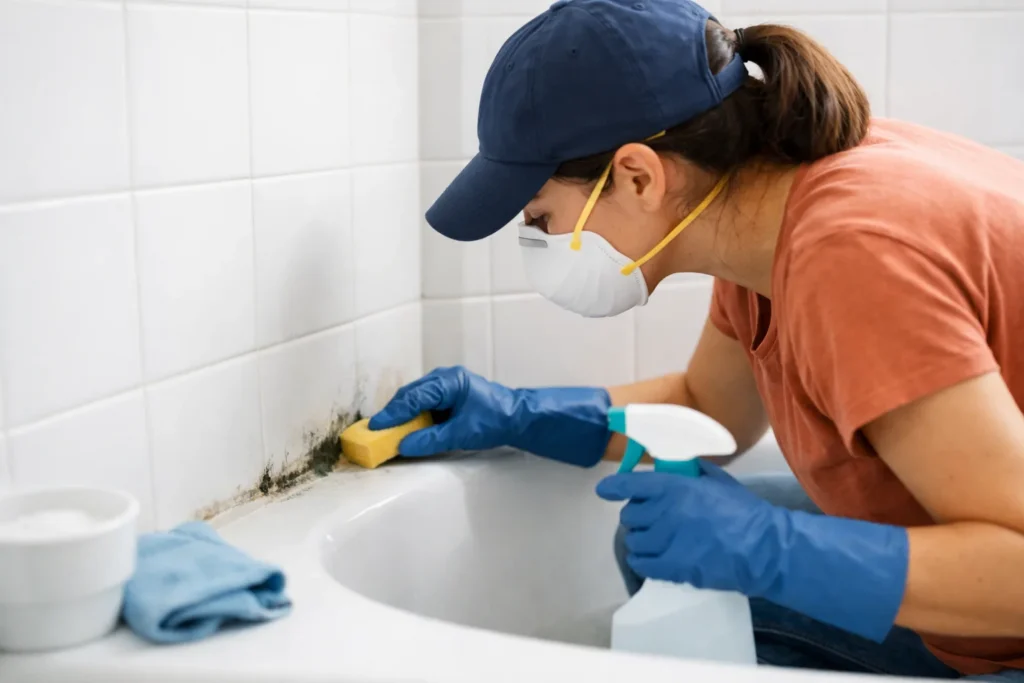
- Wear gloves. Use waterproof gloves, and eye protection for splash-prone jobs.
- Store products apart. Keep bleach and ammonia-based cleaners on separate shelves, out of reach of children.
- Keep the original containers. The label has your first-aid instructions on it.
Keep products and chemicals sorted and stored safely as part of a bigger cleanup. Our guides in home organization show how to set aside hazardous items for proper disposal.