


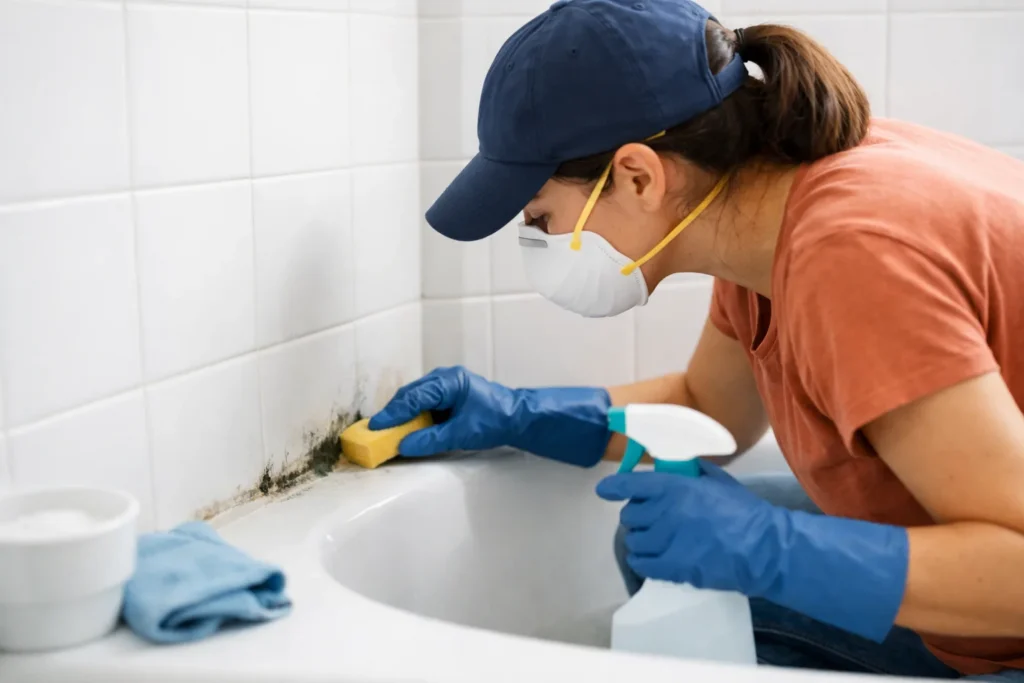
In Florida, bathrooms fight a losing battle against humidity. A hot shower, a small window, and a fan that barely moves air create ideal conditions for mold. The good news is that a small patch is usually a manageable job. The U.S. Environmental Protection Agency has published guidance for homeowners on mold in the home, and its core message is that mold needs moisture, and moisture control is the real fix.
Know what you are dealing with
Mold on bathroom walls, grout, and shower curtains usually shows as black, gray, green, or pink spots. A musty smell is another sign. The EPA advises that, in general, homeowners can handle areas smaller than about 10 square feet, which is roughly a 3-foot by 3-foot patch. Larger areas, or mold in the heating and cooling system, call for professional help.
People with asthma, allergies, a weakened immune system, or other health conditions should talk to their doctor before cleaning mold and may want someone else to do it.
Protect yourself first
- Gloves: long, waterproof gloves that go past the wrist.
- Mask: an N95 respirator, if you have one, to avoid breathing in spores.
- Eye protection: goggles without ventilation holes.
- Ventilation: open a window and run the fan, and keep the door open to the rest of the house closed to avoid spreading spores.
Never mix cleaning products. Bleach with ammonia or acids can release toxic gases, and this is a risk in small bathrooms. If you use a commercial product, follow the label exactly.
How to clean a small patch
- Fix the source of water. Repair leaks, then clean. Otherwise the mold will return.
- Scrub hard surfaces such as tile, tubs, and glass with detergent and water and a stiff brush.
- Rinse and dry completely, using a clean cloth and a fan.
- Bag the rags and sponges and discard them, because mold spores stay in porous materials.
- Replace porous items. Moldy ceiling tiles, drywall, and carpet can rarely be cleaned completely, and often have to be removed.
The EPA notes that killing mold with a biocide is not usually necessary, and that detergent and water are often enough. Removing the mold and fixing the moisture matter most. For grout, an old toothbrush works well, and caulk that has turned black is often easier to replace than to clean.
Control moisture so it stays away
- Run the exhaust fan during every shower and for 20 to 30 minutes afterward.
- Squeegee the tile and glass after use.
- Hang towels so they dry, and wash bath mats often.
- Keep indoor humidity below about 60%, ideally 30% to 50%, with a small hygrometer to check.
- Fix drips from faucets and showerheads promptly.
- Consider an air conditioner or dehumidifier if the house stays damp in summer.
When to call a professional
- The moldy area is larger than about 10 square feet.
- You suspect mold inside walls, under flooring, or in the air conditioning ducts.
- Water damage came from sewage or a flood.
- Someone in the household has health symptoms that seem related.
- The mold returns after you have cleaned it and fixed the leak.
If you rent, tell your landlord in writing about mold and moisture problems, and keep a copy. After a storm or flood, Florida homes can develop mold within a day or two, so dry water-damaged materials quickly.
A tidy bathroom dries faster. See our home organization guides for ideas on keeping counters and under-sink spaces clear so air and cleaning cloths can reach every corner.