




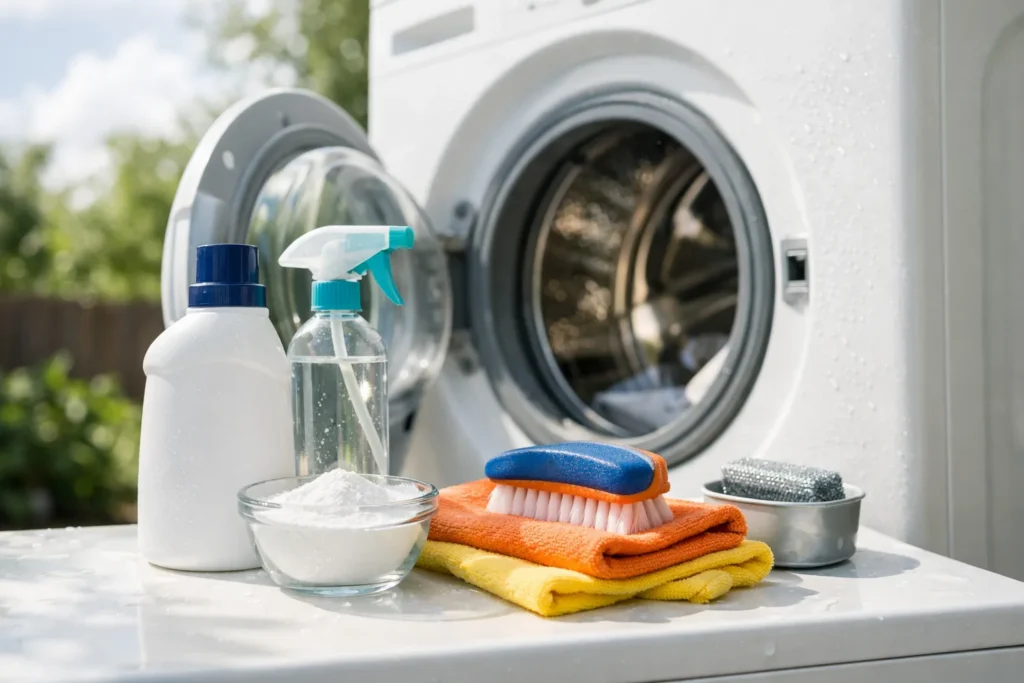
If your front-load washer smells like a wet basement, you are not alone. The tight rubber door seal and the low water use that make these machines efficient also leave moisture behind. In a place like Charlotte, North Carolina, where summer days are hot and humid, mildew has all the conditions it needs. The fix is not complicated, and it takes about twenty minutes a month.
Why the smell happens
After every wash, a little water stays in the rubber gasket, in the detergent drawer, and in the drain pump filter. Detergent residue, lint, and skin oils feed bacteria and mold in that damp space. Using too much detergent makes it worse, because the extra suds leave a film that traps more residue. A washer that is closed up between loads has no chance to dry.
What you need
- A clean microfiber cloth and an old toothbrush.
- Warm water and a few drops of dish soap.
- White distilled vinegar, or a washer cleaning tablet made for front-loaders.
- A small container to catch water from the drain filter, and a towel.
Read your owner’s manual first. Some manufacturers recommend a washer cleaning cycle, others advise against vinegar, and many warn against using bleach and vinegar together or at different times in the same cycle. Never mix cleaning products. If you use bleach, use it alone and follow the label. To fit a monthly washer cleaning into a schedule you will keep, see routines and planning.
Step by step
- Wipe the gasket. Pull back the rubber seal and look in every fold. Wipe away dirt, hair, and slime with a cloth dipped in warm, soapy water. Use the toothbrush on stubborn spots.
- Clean the glass and door. Wipe the inside of the door, then dry both the glass and the seal.
- Clean the detergent drawer. Pull the drawer out (many slide out with a button or a tab), rinse it in the sink, and scrub the slot with the toothbrush.
- Empty the drain pump filter. Usually behind a small panel at the bottom front. Put a towel and a shallow container down, open the filter slowly, and let the water drain. Remove coins, lint, and hair. Rinse and put it back, tightening it fully so it does not leak.
- Run a hot cleaning cycle. Use your washer’s clean cycle if it has one. Otherwise run an empty hot-water cycle with the cleaner recommended in the manual.
- Dry everything. Wipe the drum and the gasket with a dry cloth and leave the door open.
Daily habits that prevent mold
- Leave the door ajar. Prop it open after the last load of the day so air can reach the drum and gasket. If you have small children or pets, make sure they cannot climb in.
- Remove wet clothes quickly. A load sitting in the drum for hours adds moisture and odor.
- Use the right detergent. Choose a high-efficiency detergent and measure it. More is not cleaner.
- Wipe the seal weekly. A quick pass with a dry cloth takes thirty seconds.
- Run a hot wash monthly. Use a regular hot or sanitize cycle once a month with no clothes in it.
Efficiency and ratings
Many front-loaders carry an Energy Star label, which means the model meets efficiency criteria for energy and water use. That efficiency is a big reason residue stays behind, because the machine uses less water to rinse. Follow the manual’s detergent guidelines to make up for it. Moving the washer a few inches from the wall can also improve airflow and help the area dry.
Signs you need more than a cleaning
Persistent odor after a cleaning cycle, black mold that returns in the gasket within days, or water pooling on the floor are signs of a worn seal or a drainage issue. A damaged gasket can be replaced. If a leak or odor persists, contact the manufacturer or a licensed appliance repair professional rather than taking the machine apart yourself.