


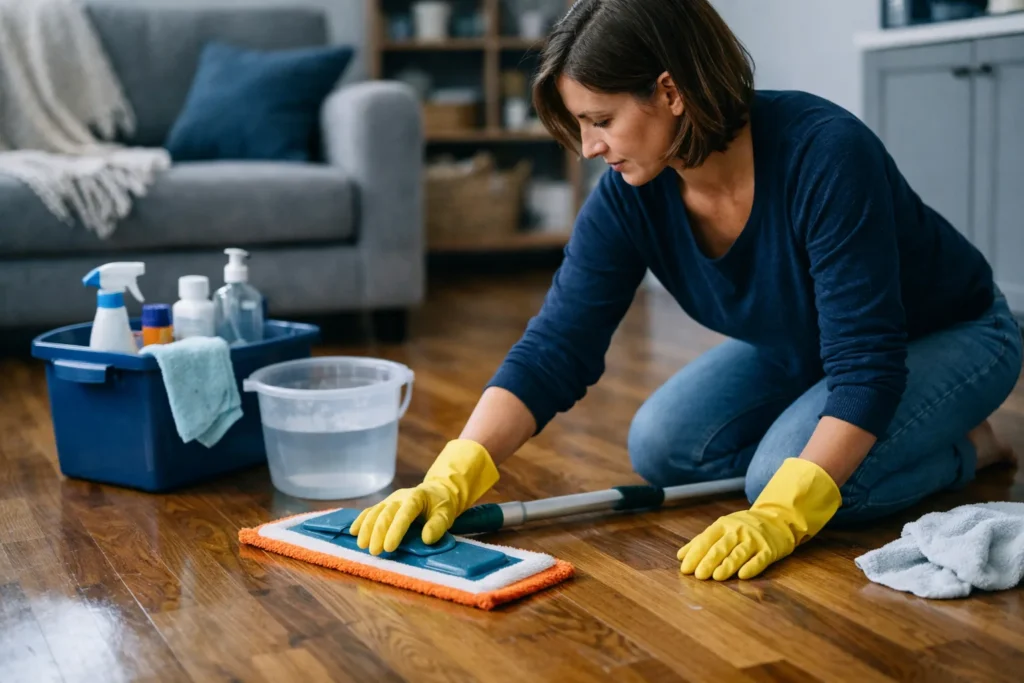
Hardwood floors are durable, but the finish on top is what takes the daily abuse. Grit scratches it, standing water seeps into the seams, and the wrong cleaner can dull or damage it. The National Wood Flooring Association, a trade group for the wood flooring industry, publishes care guidance that stresses a simple principle: keep the floor clean and dry, and use products made for wood floors.
Dry cleaning comes first
Most of the dirt on a floor is dry: sand, pet hair, dust, and crumbs. Remove it before you touch the floor with anything damp.
- Sweep with a microfiber dust mop or a soft-bristle broom every day or two in busy areas.
- Vacuum with a floor setting or a soft brush head. Turn off any beater bar, which can scratch the finish.
- Work with the grain, in the direction of the boards, to pull dust out of the seams.
Doormats on both sides of each exterior door catch most of the grit before it reaches the floor. Shake them out regularly, because a mat full of sand works like sandpaper.
A barely damp mop, not a wet one
Water is the biggest risk. It can cause boards to cup, warp, or stain. When your floor needs more than a dry pass, follow these steps:
- Dry-clean the floor first.
- Check the label or the manufacturer’s instructions for the cleaner recommended for your finish.
- Dampen a clean microfiber mop pad with the cleaner or a little water. It should feel barely damp, never dripping.
- Mop a small section at a time, in the direction of the grain.
- Dry any damp spots right away with a clean, dry cloth.
Never use a steam mop on hardwood unless the flooring manufacturer says it is safe. Heat and moisture can damage the finish and the wood.
Products to avoid
- Oil soaps and wax-based polishes, unless your floor is unfinished or waxed and the maker recommends them. They can leave a film.
- Vinegar and water mixtures, which can dull some finishes over time.
- Ammonia and bleach, which can damage the finish and are hazardous to mix.
- Abrasive pads or powders, which scratch.
- Soaking, flooding, or leaving wet towels on the floor.
When in doubt, call the installer or the flooring manufacturer. Different finishes, such as surface-sealed polyurethane and penetrating oil, need different care. Find the National Wood Flooring Association at nwfa.org for general homeowner guidance.
Prevent scratches
- Felt pads on furniture legs. Replace them when they wear out or collect grit.
- Lift furniture; do not drag it. Use sliders or ask for help with heavy pieces.
- Trim pet nails and keep an eye on rolling chair wheels, which can leave marks. Choose a protective mat made for hard floors.
- Take off hard-soled shoes at the door, especially high heels.
- Use area rugs in high-traffic zones, with a rug pad that is safe for finished wood.
Handle spills right away
Blot, do not wipe, so the liquid does not spread. Dry the spot with a clean cloth. For sticky residue, use a slightly damp cloth and then dry the area. If you see white spots or a cloudy patch, moisture may be trapped in the finish. A professional can advise on repair.
Keep a schedule
A simple rhythm covers most homes: a quick dry sweep every day or two, a thorough vacuum weekly, a barely damp mop every few weeks, and a seasonal check of felt pads. Over years, a floor may need a screen and recoat, which is a job for a professional. Add these steps to your weekly plan in routines and planning.