



A Brooklyn apartment does not have a garage, an attic, or a basement to hide things in. Every object competes for space with the people who live there. A 30-day calendar works well in that setting because each task takes ten to twenty minutes and a single zone is never large enough to overwhelm you.
How the month works
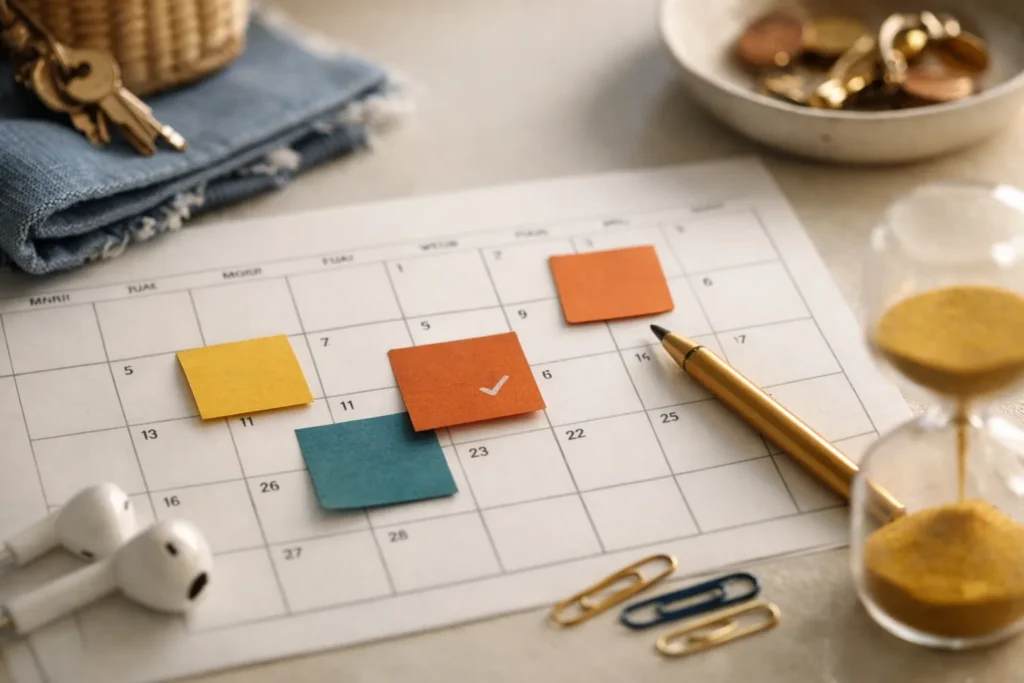
The first week is a warm-up: one item per day, then two, then three. The idea comes from a popular minimalism challenge, and it builds the habit before the tasks get bigger. From week two on, you take one zone a day. Set a timer for fifteen minutes, empty the zone, keep what belongs, and bag the rest. Do not reorganize the whole home in a day. Cross off each day on a sheet taped to the fridge.
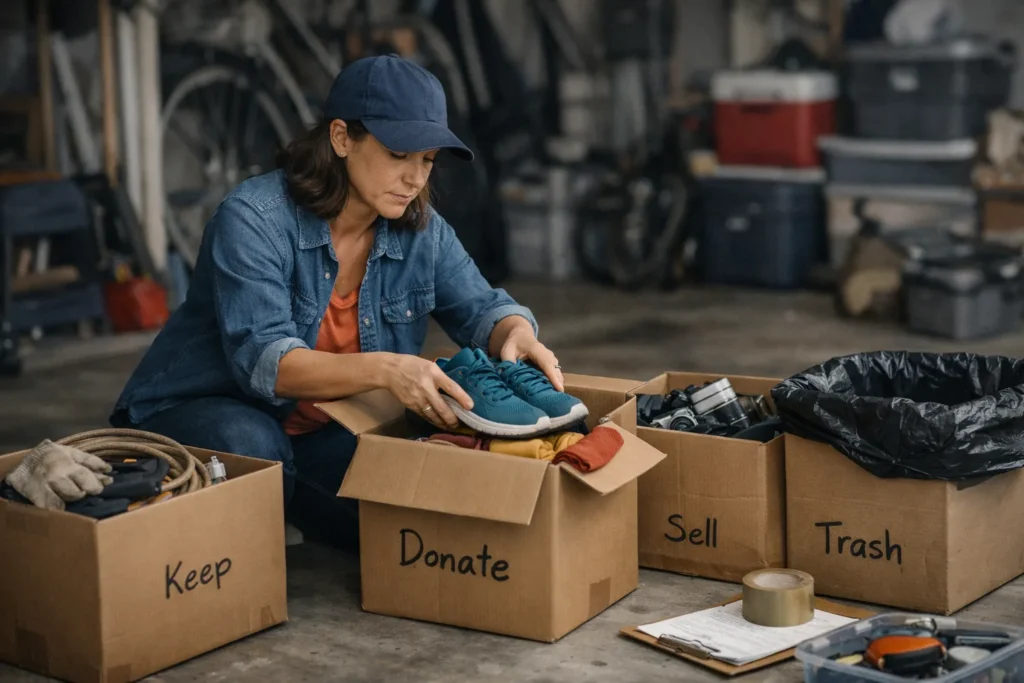
Keep two bags at the front door: one for donations and one for trash and recycling. When a bag is full, take it out that day. In a small apartment, a bag left by the door becomes part of the floor plan.
Week one: build the habit
- Day 1: Find one item you no longer use and remove it. Start with something easy, like a dried-out pen.
- Day 2: Remove two items from the bathroom, such as expired medicine or an old razor.
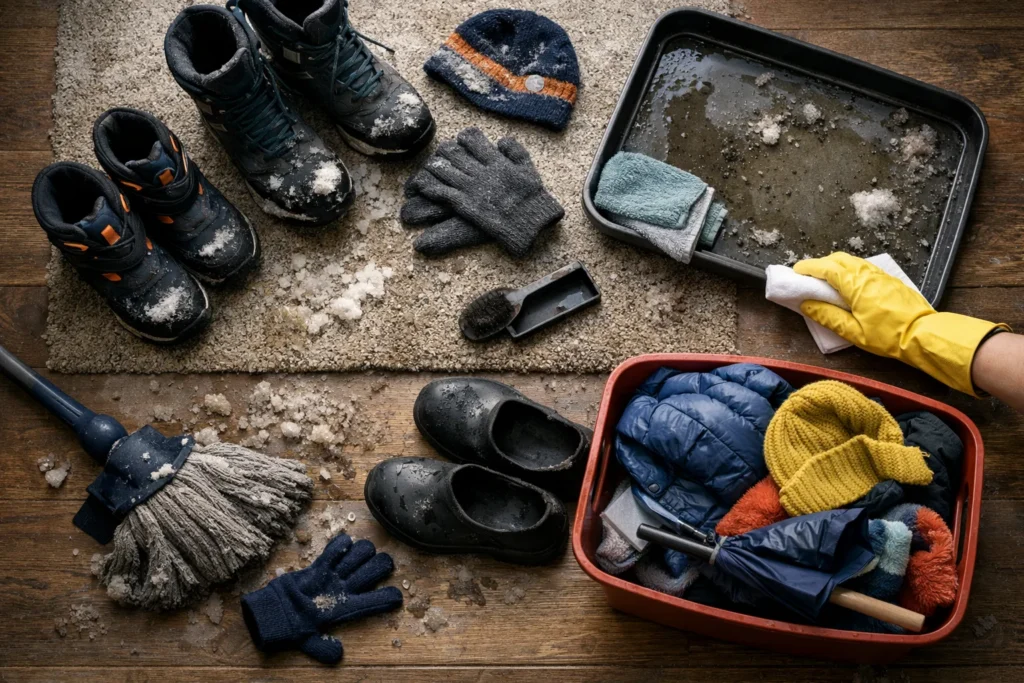
- Day 3: Remove three items from the entryway: odd gloves, a broken umbrella, or flyers.
- Day 4: Clear the top of the refrigerator and the front of the fridge door.
- Day 5: Go through your tote bags and reusable shopping bags. Keep the ones in use.
- Day 6: Clear one nightstand.
- Day 7: Rest. Carry the donation bag out.
Week two: kitchen
- Day 8: Food storage containers. Match every lid, and recycle the strays.
- Day 9: Spices and baking supplies. Check dates and combine duplicates.
- Day 10: The junk drawer. Take everything out and keep only what you used this year.
- Day 11: Mugs, glasses, and plates. Keep the number your household actually uses.
- Day 12: Pots, pans, and gadgets. Remove duplicates and anything you have not touched in a year.
- Day 13: The pantry or food shelf. Group by type and toss anything expired.
- Day 14: Rest day. Wipe down one cleared shelf.
Week three: bathroom and bedroom
- Day 15: Medicine cabinet. Check expiration dates and ask your pharmacy or local program about safe disposal of old medicine.
- Day 16: Under the bathroom sink. Combine half-empty bottles of the same product.
- Day 17: Towels and sheets. Keep two sets of sheets per bed and a few towels per person.
- Day 18: Dresser top drawer. Remove worn-out socks and underwear.
- Day 19: Closet floor and shoes. Pair them up and donate the ones that hurt.
- Day 20: Hanging clothes. Remove anything you have not worn in a year.
- Day 21: Rest day.
Week four: living area and the rest
- Day 22: Coffee table and media stand. Sort remotes, cords, and chargers.
- Day 23: Books and magazines. Keep a shelf, not a stack.
- Day 24: Paper and mail. Shred, recycle, and file.
- Day 25: Entry closet or coat area. Keep what fits the season.
- Day 26: Under the bed. Pull everything out and decide what truly belongs there.
- Day 27: Electronics and cables. Label what you keep and recycle the rest.
- Day 28: Cleaning supplies. Keep a short list of what you actually use.
- Day 29: Walk the apartment and clear any surface that gathered clutter again.
- Day 30: Take final photos and plan the next round.
Disposal in New York City
Large items, electronics, and textiles each follow their own rules in the city. The New York City Department of Sanitation publishes schedules and options for donation, recycling, and bulky-item pickup, so check its current guidance before you leave a sofa on the curb. Do not assume an item can go out with regular trash. Building managers often have their own rules about where bags may sit and when.
If clothes and shoes are the biggest challenge, our guides in storage and closets can help you set them up again in the space you cleared.
After day 30
Do not expect a perfect apartment. Expect fewer decisions, clearer surfaces, and a short list of zones that still bother you. Repeat the calendar in three months with a shorter list, or choose five zones and do them once a week. The habit matters more than the day count.