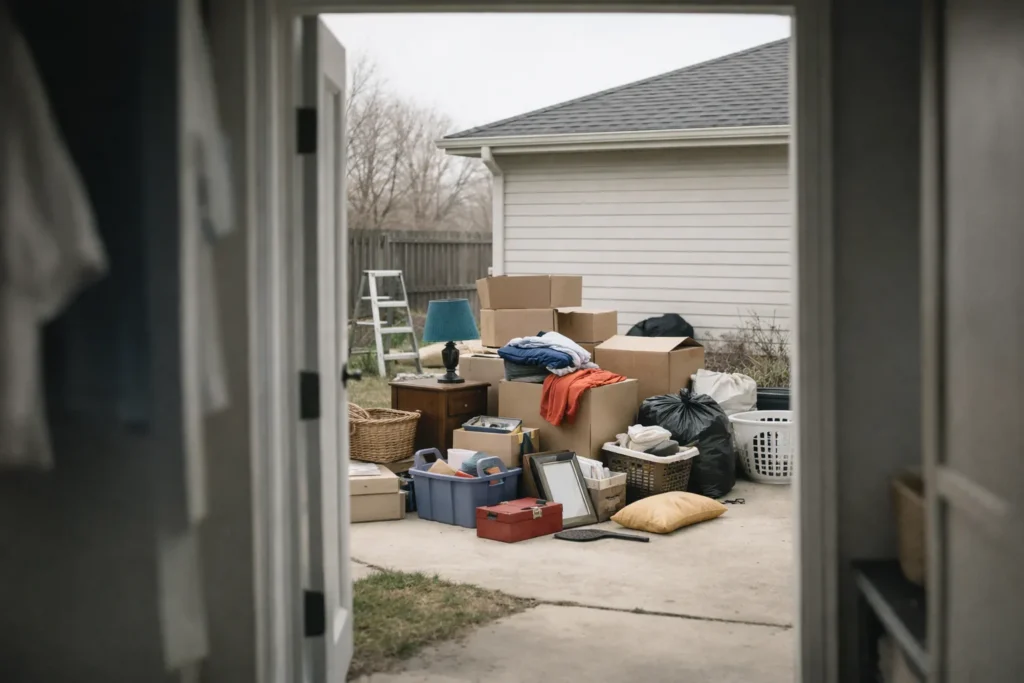




The garage is where unfinished decisions go to wait. A broken bike, half a can of paint, a box of cables, and a crib nobody needs anymore can all sit for years. The four-box method gives every object a destination in a single pass, so nothing ends up in a fifth pile on the driveway.
Set up before you lift anything
Pick a day with dry weather and clear the driveway or an empty section of the floor. Line up four large boxes or bins and label them with a marker: keep, donate, sell, and toss. Add one extra labeled bucket for hazardous items, which never go in the toss box. Wear closed shoes, gloves, and a dust mask if the space is dusty.
Work in sections, not randomly. Start at one corner and move clockwise, pulling out everything from the first shelf or wall before you touch the next. Seeing a whole category laid out, such as every screwdriver you own, makes duplicates obvious.
What goes in each box
- Keep: items you used within the past year, tools you actually reach for, and seasonal gear you will use this year. Each item must have a spot in the garage when you finish.
- Donate: clean, working items in good condition that someone else could use right now.
- Sell: anything with real resale value, such as a working lawn mower, sports equipment, or a bike. Set a deadline of two weeks. After that, anything left moves to the donate box.
- Toss: broken, rusted, moldy, or unsafe items, and anything that cannot be donated.
What Goodwill generally accepts and refuses
Donation centers differ from one location to the next, so call or check your local Goodwill Industries site before loading the car. In general, thrift stores accept clothing, housewares, small furniture in good shape, books, toys, and working tools. They often refuse the items below because of safety rules, recalls, or the cost of disposal.
- Paint, solvents, motor oil, and other chemicals.
- Propane tanks, gasoline, and fireworks.
- Cribs, car seats, and other children’s products with safety recalls or expiration dates.
- Mattresses and box springs, at many locations.
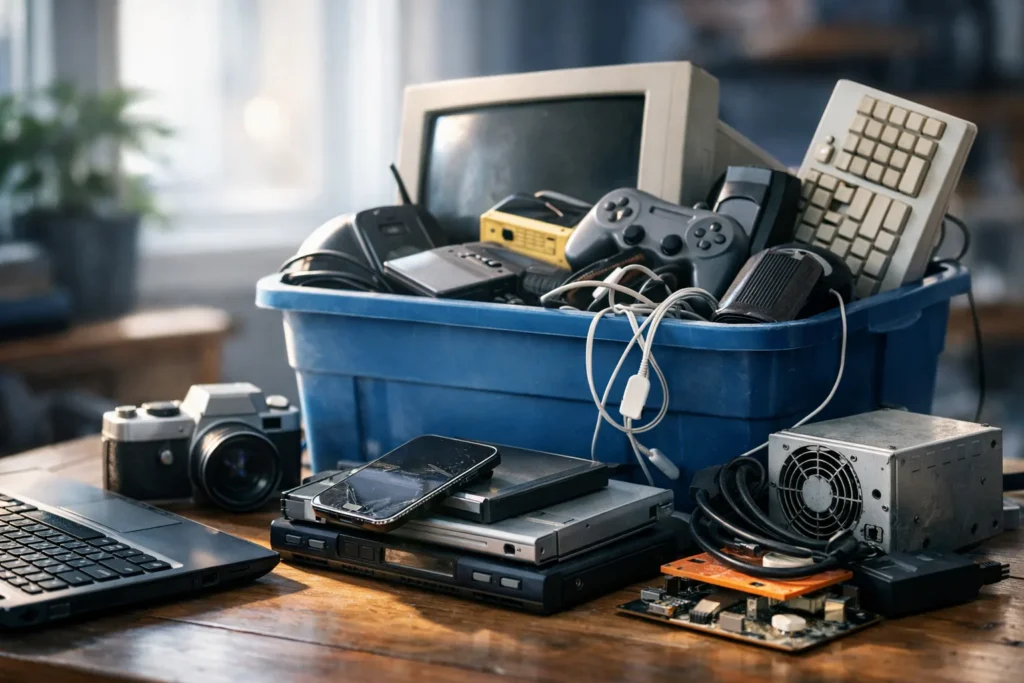
- Large appliances that do not work, and tube televisions.
- Items with mold, mildew, heavy rust, or broken parts.
Ask whether the center accepts tools with missing pieces, partial sets, or items with cut cords. When in doubt, a quick phone call saves a wasted trip.
Handle hazardous items separately
Paint, pesticides, pool chemicals, antifreeze, batteries, and fluorescent bulbs are household hazardous waste. Do not pour them out, and do not put them in the regular trash. The Environmental Protection Agency explains how households can find drop-off events and collection sites through their local government. Keep products in their original containers, make sure lids are tight, and stand the containers upright in a sturdy box for the car ride. Never mix different chemicals in the same container.
Put the keep box back in order
Once the other three boxes are out of the garage, return the keep items to the space in zones. Heavy things such as bags of soil or tool chests go on the floor or low shelves. Frequently used tools go at chest height, and rarely used seasonal items go on high shelves or overhead racks. Hang long-handled tools on the wall so the floor stays clear for the car. Label each shelf, or each bin, so family members can put things back without asking.
For ideas on what stores safely in a hot garage, read our guide in storage and closets.
Finish the same day
A cleanout turns into a second mess when the donate and toss boxes stay on the driveway for a week. Load the donate box into the car before dinner and plan a drop-off for the next morning. Put the toss items in the trash or take them to a recycling site. Photograph anything you plan to sell, post it that evening, and take a final photo of the clean garage so you can compare it in a few months.