



A basement in the Pacific Northwest is a hard test for any storage container. Long, wet winters keep the air heavy, concrete walls sweat, and a bin that works well in a dry hall closet can turn into a mold hazard here. The right choice depends less on price than on how each material handles moisture.
Start with the moisture level of the room
Before you buy bins, find out how damp the space really is. The U.S. Environmental Protection Agency recommends keeping indoor relative humidity roughly between 30 and 50 percent. A small digital hygrometer left on a shelf for a week will show you the range. If the number sits above 60 percent, fix the moisture problem first: a dehumidifier, a gutter that drains away from the foundation, or a cracked window well. No container makes up for a wet room.
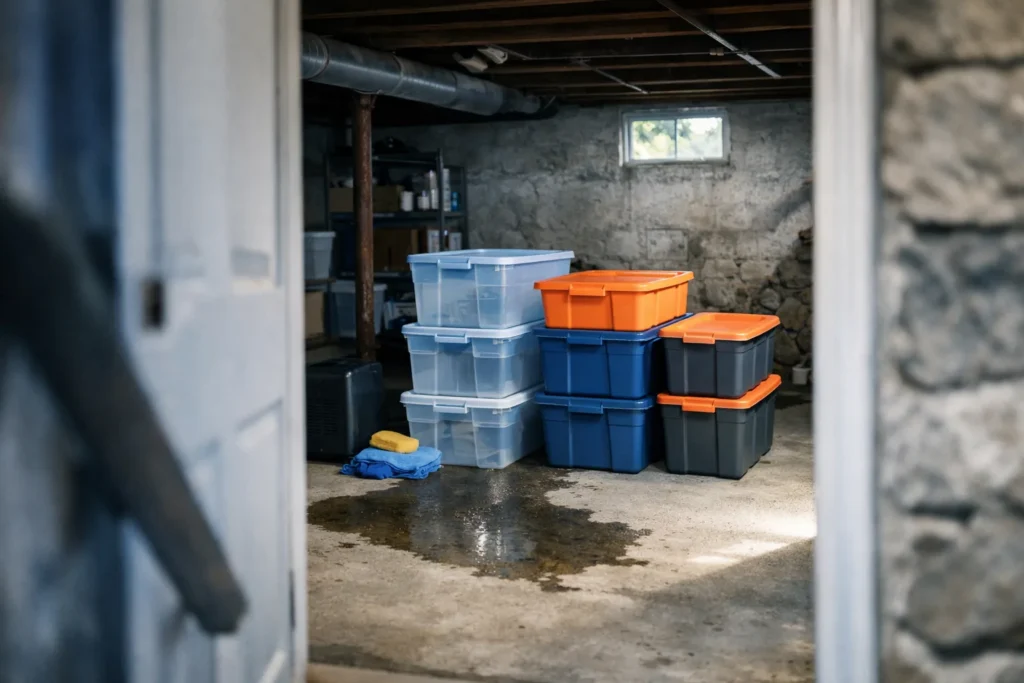
Also look for signs that water enters, such as dark streaks, white mineral powder on the concrete, or a musty smell near the floor. Those spots are not places to stack anything.
How each bin type compares
| Bin type | Best for | Moisture risk | Limits |
|---|---|---|---|
| Plastic with a gasket lid | Documents in sleeves, holiday decor, tools, camping gear | Low, if sealed and dry when packed | Traps any damp already inside; can crack in cold |
| Plastic with a snap lid, no gasket | Toys, sports gear, craft supplies | Moderate; vapor still gets in slowly | Not for fabric or paper you care about |
| Fabric or canvas bins | Dry closet overflow, pillows in a dry room | High; fabric absorbs humidity | Keep out of any basement above 50 percent humidity |
| Cardboard boxes | Short-term moving use only | Very high; wicks water and attracts pests | Do not leave on a concrete floor |
| Metal or wire shelving with bins | Heavy items, paint cans, overflow | Low for the rack; depends on bin | Can rust if the room stays wet |
Why sealed plastic wins, with one catch
A bin with a rubber gasket and locking latches keeps out most damp air, silverfish, and spilled water. The catch is that it also traps whatever is inside when you close it. If you pack a blanket that still holds a little moisture, it will mold in the dark. Always let items dry completely, ideally in warm, dry air upstairs, before they go into a sealed bin.
Clear plastic saves you from opening everything to find one item. Pick a size you can lift when full; a bin that weighs more than about 30 pounds (14 kg) will end up dragged, and dragging cracks lids.
Get everything off the floor
Concrete floors hold and release moisture. Raise every bin at least 4 to 6 inches (10 to 15 cm) off the ground using metal or plastic shelving, or a pallet made of treated materials. Leave a gap of an inch or two between the shelves and the wall so air circulates. Stack no more than two or three bins high, and put the heaviest ones on the bottom shelf.
If you keep paper records, store them on the highest shelf you can reach, far from pipes and the washer. For tips on sorting records, see Home organization.
Label so you do not unpack everything
A label should name the contents and the date you packed them. Put the label on the narrow end and the lid so it shows from any angle. Use a permanent marker or printed labels that tolerate humidity; paper tape peels off in a damp room. Keep a one-page inventory taped inside a cabinet door or stored on your phone, so you can find the bin with the winter tires or the extra sheets without a search.
Check the basement twice a year
Choose two dates, perhaps the start of fall and the end of spring, to inspect. Open a few bins, feel for dampness, sniff for mustiness, and look for any bin that has gone soft or discolored. Replace a failing container rather than hoping it will hold another year. When a bin shows mold on contents, handle it carefully and consult EPA guidance for small patches before you decide what to keep.