



Wall shelves are one of the best ways to add storage to a small rental, and one of the easiest ways to worry about your deposit. The good news is that a few small, clean holes are usually not a problem, and in Texas the law draws a line between normal wear and actual damage. This guide covers how to hang shelves securely and what to know before you pick up the drill.
Start with your lease
Read the lease before you put anything in a wall. Some leases allow small nail or screw holes, some require written permission, and a few prohibit them altogether. If the lease is unclear, send your landlord a short message describing what you plan to hang and ask for a reply in writing. A saved email is better than a verbal okay.
Find out what is behind the wall
Most apartment walls are drywall, a thin gypsum panel over wood or metal studs. A stud finder locates the framing. Screwing into a stud gives the strongest hold, and standard framing puts studs roughly 16 inches (41 cm) apart. Between studs, you need an anchor. Avoid drilling near outlets, switches, and bathroom or kitchen walls, where wires and pipes run.
Pick the anchor by weight
Every anchor package lists a weight rating, and those ratings assume ideal conditions. Pick one that holds at least twice what you plan to put on the shelf, and distribute the load across two or more anchors.
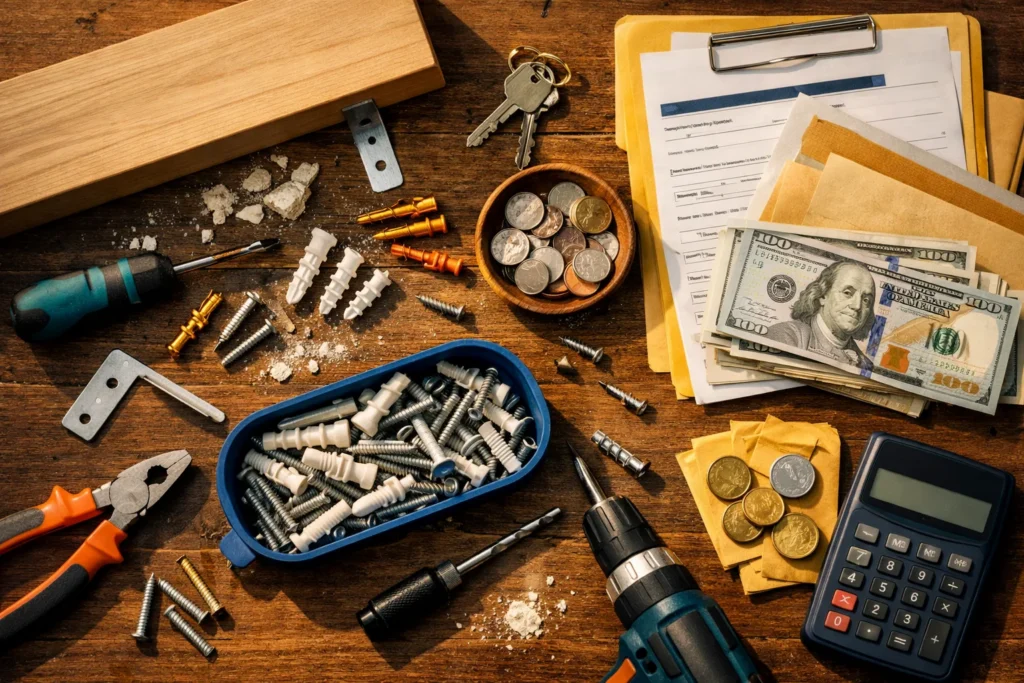
- Plastic expansion anchors: fine for very light items such as a small frame or a single light shelf, around 10 to 25 pounds (4.5 to 11 kg) at best. They are the easiest to remove and leave the smallest hole.
- Self-drilling threaded anchors: screw directly into drywall without a pilot hole. Good for moderate loads, often 25 to 50 pounds (11 to 23 kg), but they leave a bigger hole when removed.
- Toggle bolts or snap toggles: spread the weight behind the wall and can hold heavy loads, around 50 pounds (23 kg) or more each. They need a larger hole, so use them only when your lease allows.
- Screws into studs: the best choice for books, plants in pots, and anything heavy. Use a screw long enough to go 1 inch or more into the stud.
Keep the holes small and repairable
- Mark the level line with a pencil and a level.
- Drill a pilot hole the size recommended on the anchor package.
- Install the anchor, then the bracket, and tighten until snug without crushing the drywall.
- Test with gentle downward pressure before loading the shelf.
When you move out, remove the anchors and fill small holes with spackle, let it dry, and sand it flat. Touch up with matching paint only if the lease allows it; otherwise leave the repair neutral and tell your landlord.
What Texas law says about deposits
The Texas Property Code, in its chapter on security deposits, sets the basic rules. In general terms, a landlord may deduct for damage beyond normal wear and tear, but cannot deduct for normal wear and tear itself. The statute generally requires the landlord to return the deposit, with an itemized list of any deductions, within 30 days after you move out, and a tenant is expected to give a forwarding address in writing. You can read the text on the Texas Legislature’s statutes site, and the Texas Attorney General publishes plain-language tenant information.
Whether a few small nail or screw holes count as normal wear or as damage can depend on the lease and the facts. Many landlords treat a few small holes as ordinary, while large or numerous holes, torn drywall, or unfilled anchors can lead to charges. This is general information, not legal advice. If you have a dispute, document your situation and consider asking a tenant resource group or an attorney.
Protect yourself
Take photos of the wall before you start and after you repair it, with the date visible. Keep your lease and any written permission. When you move out, ask for a walk-through with the landlord and take photos of every wall. Doing these things costs ten minutes and can settle a deposit argument before it starts.
No-drill options
If you want no holes at all, consider leaning a shelf against the wall, using a freestanding unit, or placing storage on top of a dresser. Adhesive strips can hold light items, but they can also peel paint, so check the weight limits and removal instructions. For ideas on freestanding storage, browse Storage and closets.