


Few household tasks take so little time and matter so much. A working smoke alarm gives you early warning of a fire, and a carbon monoxide alarm detects a gas you cannot see or smell. Both fail quietly: a dead battery or an expired sensor looks exactly like a working alarm until the moment it is needed. Put the checks on a monthly list and the problem goes away.
What to do once a month
Pick a date you will remember, such as the first Saturday, and walk through the house with a step stool.
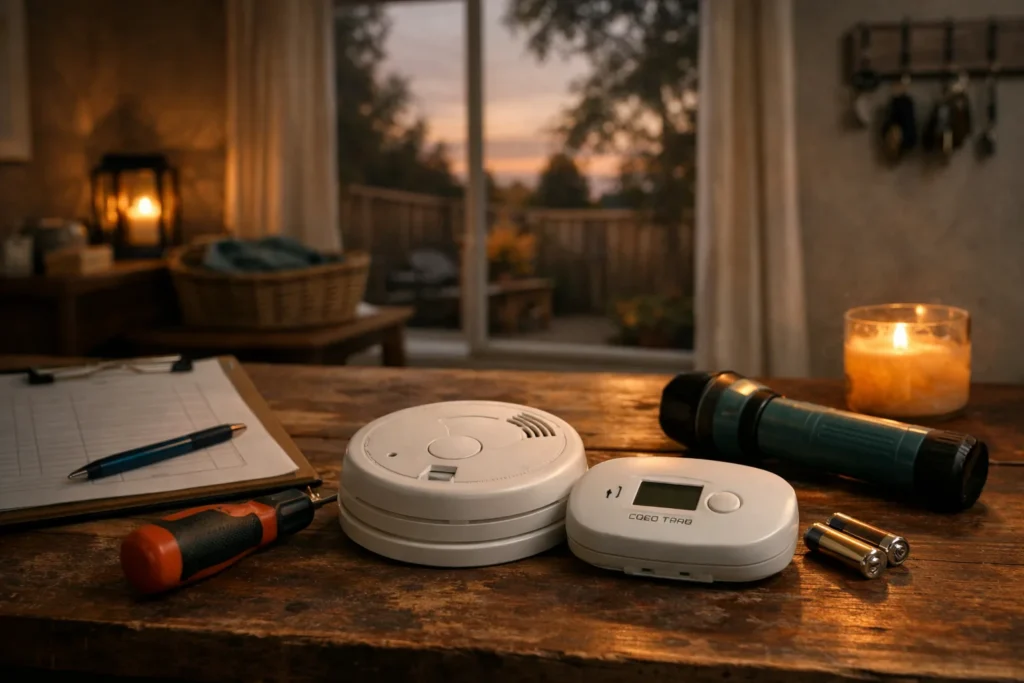
- Press and hold the test button on each smoke alarm and each carbon monoxide alarm until it sounds. A weak or silent response means the battery or unit needs attention.
- Wipe dust off each alarm with a dry cloth or a vacuum brush attachment. Dust and cobwebs can clog the sensor.
- Check the indicator light. Many units blink green when working and flash a different color or chirp when something is wrong.
- Note the date on a calendar so you can see when you last checked.
If you have a kitchen alarm that goes off whenever you sear dinner, do not pull the battery. Move the alarm farther from the stove or fan, or switch to a model designed to reduce nuisance alerts, and always use the hush button instead.
What the fire safety groups say
The National Fire Protection Association, the nonprofit that writes widely used fire codes, gives plain advice on this.
Test smoke alarms at least once a month, and replace the entire smoke alarm when it is 10 years old or sooner if it does not respond properly when tested. — National Fire Protection Association (NFPA), paraphrased from its smoke alarm safety guidance
The U.S. Consumer Product Safety Commission gives similar advice, and adds that carbon monoxide alarms should be on every level of the home and near sleeping areas. For a broader look at fire safety and standards, the NFPA website offers free public education material.
Where alarms belong
The general guidance from fire safety groups is straightforward.
- Put a smoke alarm inside each bedroom, outside each sleeping area, and on every level of the home, including the basement.
- Mount smoke alarms on the ceiling or high on a wall, following the maker’s instructions.
- Place carbon monoxide alarms on every level and outside separate sleeping areas. Follow the manufacturer’s directions for height, since the gas mixes with air.
- Keep alarms away from windows, vents, and ceiling fans where drafts can interfere.
Many homeowners choose interconnected alarms, so that when one sounds, all of them sound. If you rent, ask your landlord about requirements and who is responsible for batteries and replacement.
Batteries and replacement dates
Alarms with replaceable batteries need fresh ones at least once a year, and sooner if they chirp. A common habit is to change them when you change your clocks in spring or fall. Units with sealed ten-year batteries should be replaced as a whole at the end of their life.
Look at the date of manufacture, usually printed on the back or side of the alarm. Smoke alarms generally last up to 10 years. Carbon monoxide alarms often have shorter lives, commonly 5 to 7 years, though the actual number depends on the model, so check the label and the manual. Write the replacement year on the alarm with a marker.
What to do when an alarm sounds
For a smoke alarm, get everyone out quickly, close doors behind you if you can, and call 911 from outside. Do not go back inside. Practice an escape plan twice a year with two ways out of each room and a meeting spot outside.
For a carbon monoxide alarm, move everyone into fresh air immediately, call 911 or your emergency number, and do not re-enter until emergency responders say it is safe. Symptoms such as headache, dizziness, nausea, or confusion, especially when several people feel them at once, are a warning sign. Never run a generator, grill, or car engine in a garage or enclosed space. See a doctor after any suspected exposure.
Make it a habit
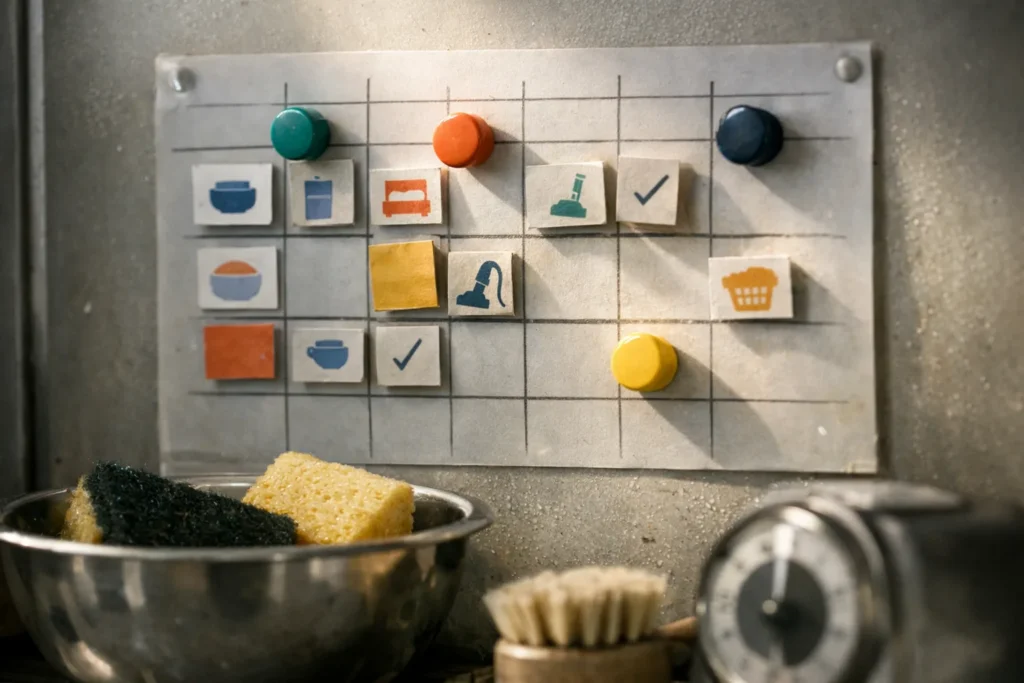
The best way to keep this going is to tie it to something you already do. Add it to your monthly cleaning list, or place a reminder on your phone. Involve children; letting them press the test button teaches them what the sound means. For more on keeping appliances and vents safe through the year, see Cleaning and upkeep.